Be specific
AI only knows what it's told. Saying exactly what you want gets an answer instead of a guess.
- Vague
- “Tell me about dogs”
- Better
- “Tell me three surprising facts about sausage dogs”
Your child will use AI for the rest of their life, the way we grew up with the internet. The ones who do well won't be those kept away from it, or those left alone with it, but those who learned to ask good questions and to check what they're told. Childhood is the safest place to learn that.
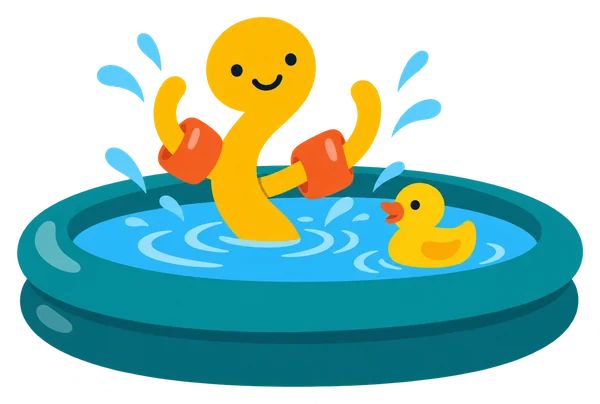
A prompt is what you ask an AI. The difference between a vague one and a specific one is the difference between these two pictures.
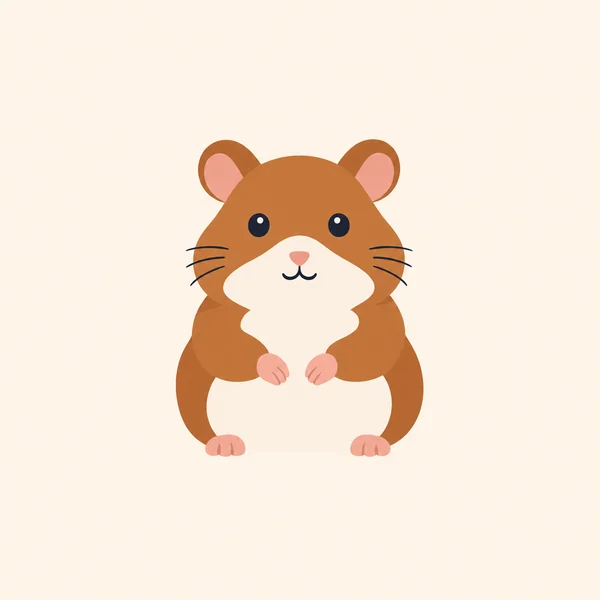
"Draw a hamster."
You get a hamster. Not the one in your head.
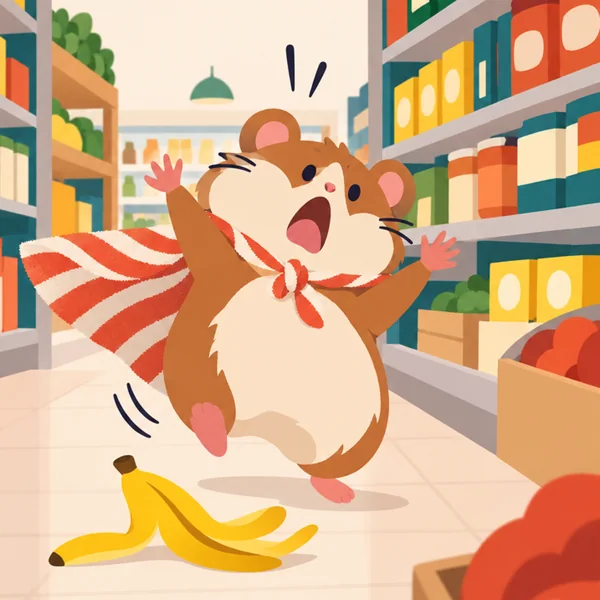
"A drama queen hamster in a towel cape, speed-waddling through a supermarket, slipping on a banana."
Every word told the AI something. That's prompting.
These are the six things Noodle teaches. The examples are the ones a 10 to 12 year old sees; younger and older children get their own.
AI only knows what it's told. Saying exactly what you want gets an answer instead of a guess.
Saying who it's for and why helps the AI pitch the answer just right.
Asking for a shape, like a list of five or 50 words, gets an answer you can use.
When an answer isn't right, changing one thing shows which word made the difference.
AI can sound sure and still be wrong. Asking how sure it is, then checking, is the habit that matters most.
Surnames, schools, addresses and photos stay out of it. AI doesn't need them, and the habit protects them everywhere online.
Ask something vague and Noodle suggests a sharper way to ask it, with a button to try it straight away.
Six one-minute lessons, each with an example and a question to improve. Trying one is free.
Pick ingredients on cards, cook a picture, then change one ingredient and see exactly what it changed.
Catch the AI out finds the made-up fact; Prompt Golf hits a target in the fewest words.
Each child's card in your dashboard shows the skills they've tried, the topics they've explored and how their quizzes went. No scores, no streaks: just enough to talk about it together.
This week Georgie learned
Be specificOne change at a timeCheck it
The big AI assistants are brilliant tools, made for adults and teenagers. Their own rules say who they're for, and children need something made for them.
Scroll sideways to see the whole table.
| Assistant | Who it's for, by its own rules |
|---|---|
| ChatGPT | 13 and over. Under-18s need a parent's permission, and its parental controls cover ages 13 to 17. OpenAI's terms |
| Claude | 18 and over. Anthropic's terms |
| Gemini | Under-13s through Google Family Link, but not for supervised accounts in the UK. Google's help page |
Checked on 12 October 2026. These rules change, so the links go to each company's own page.
No AI safety check is perfect. That's why Noodle shows you everything, instead of asking you to take it on trust.